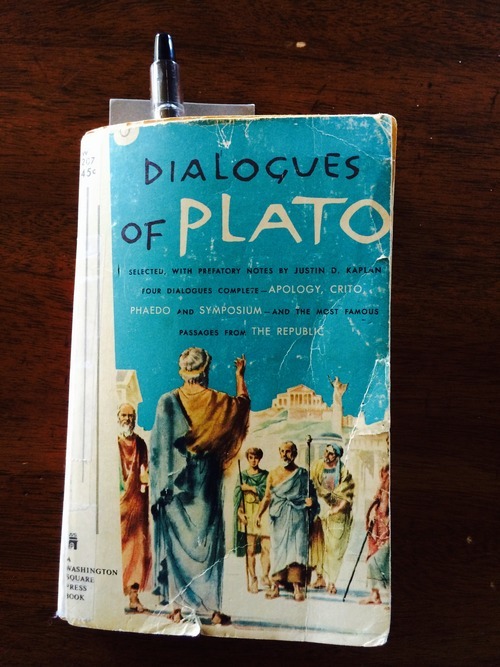
I studied rhetoric at U.C. Berkeley in the 1980s. It was a thrilling intellectual ride and slightly counter-culture decision to study classics and history during those go-go days of Wall Street and Ivan Boesky (he of the “greed is good” mantra) and Michael J. Fox’s yuppie character Alex P. Keaton on the hit T.V. series Family Ties. It seemed everybody was studying business or economics or computer science with one goal in mind: get a high-paying job. But over in Berkeley’s Dwinelle Hall, a small group of us – much to the chagrin of our parents (“how are you going to get a job studying that”) and dismay of fellow students (“why would you waste your time on that”) – was devouring the philosophical works of Plato and Aristotle, the great tragedies of Sophocles, Euripides, and Aeschylus and the majestic speeches of Cicero. We read them, wrote about them, argued over them and loved every minute.
I recently grabbed my dog-eared copy of the “Dialogues of Plato” and started making my way through the Apology, Crito and Phaedo. I was immediately reminded how special these short, yet precise narratives really are – how challenging, forthright, and inspiring. And why so special? What really grabs the reader is the simplicity and clarity of Plato. The language and narrative is straightforward and crisp – no fluff, no waste. Yet the concepts presented are so large and layered – it’s like methodically, yet quickly, going floor by floor, room by room, through a perfectly planned and beautifully constructed house.
Through his unsurpassed protagonist Socrates, Plato dives right into the great questions: How did we get here? Why are we here? How do we navigate the competing passions of our bodies and minds? What happens when we are gone? And who is this “we” anyway – is it our body, our soul, both? Each question is carefully considered and confidently answered. No fancy words or diversions – just straight-up inquiry, analysis and conclusion.
And for me, almost 30 years later, this is what’s so unique about the Dialogues – that in a modern world of such bewildering diversity, with so many fractured voices and arguments about everything and everybody, with opinion upon opinion thrown into the fray of our 21st century multilogue, comes this crystal-clear voice from over 2,400 years ago to slice through the chaos with answers. Like this: Yes, death comes from life; and life from death. And yes, you got here from a soul that always existed and simply entered your newborn body. And you – really “we” – are here to remember the essential knowledge that is already inside all of us. And if we attend to our lives well, if we live a philosophic life, our soul will eventually leave the decayed vassal of our body and enter the realm of the gods.
Life, death, learning, immortality are all here in simple, beautiful language, to be read and remembered again and again and again.